Cinéscriptographe — Futuroscope
Aperçus cinéscriptographiques (image et phrases-sources)
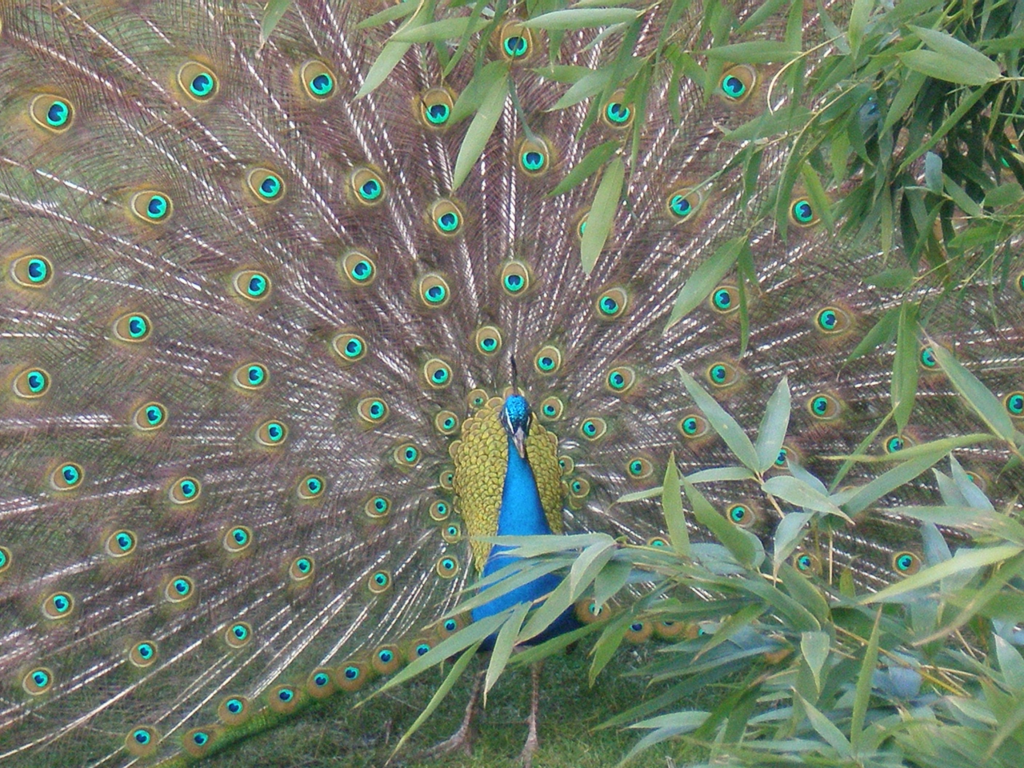
— « Dans la voix du milieu.»
« Le pavillon de mille yeux en tous chants.»
Poème en canon envoyé par voie électronique dans les espaces de commentaires publics de l’émission Allô la planète, août 2008.
— « En réparation. »
Texte de remerciement adressé à Parking de Nuit, écrit après l’interruption d’une émission en direct, en septembre 2008. Il se clôt par ces mots.
Amplification :
— « Bravo à celui qui fait pan et re-pan. »
Message laissé par une journaliste de La Souris baladeuse, sur le répondeur de Parking de Nuit, puis diffusé à l’antenne en mars 2009.
Évènement ultérieur (Mémoire révélatrice)
Le samedi 11 avril 2009 meurt René Monory, mécanicien-garagiste automobile de formation, fondateur du Futuroscope.
Lecture cinéscriptographique (a posteriori)
Relus après coup, ces éléments s’organisent autour d’un régime de la vision démultipliée et de la réparation symbolique.
Tout commence par une image : un paon, déployant une roue de regards. La photographie, prise en 2008, ne devient opérante qu’en 2009, lorsqu’elle est utilisée comme vignette. Le regard n’est pas immédiat : il est différé, réactivé.
Le poème en canon prolonge cette logique.
Il ne parle pas d’un point de vue unique, mais d’une voix du milieu. Ni première, ni dernière. Une voix prise dans un dispositif d’échos.
La « voix du milieu » se tient à l’intersection des régimes sensoriels, là où entendre, voir et traverser ne sont plus séparés.
Le « pavillon de mille yeux » n’est pas un symbole abstrait : c’est un espace de réception, un lieu où les regards se croisent, où le chant circule sans origine assignable.
Le poème de remerciement marque un déplacement. Il n’est pas descriptif. Il n’explique rien. Il répond. Écrit après une interruption radiophonique, il se clôt par une formule simple : « En réparation. » Non pas pour réparer un événement précis, mais pour tenter de maintenir une continuité, là où quelque chose s’est fissuré dans le flux.
L’amplification qui suit — « Bravo à celui qui fait pan et re-pan » — introduit une logique de répétition et de relance.
Pan : le coup, l’impact.
Re-pan : le retour, la reprise, la remise en circulation.
Il ne s’agit pas d’une explosion ni d’une prédiction, mais du mécanisme même de la projection cinéscriptographique : revoir, réentendre, rejouer après coup.
La mémoire révélatrice prend la forme d’une disparition. René Monory meurt en avril 2009. Mécanicien-garagiste automobile de formation, il fut l’architecte d’un lieu entièrement consacré à la vision du futur. Le Futuroscope. Un espace où l’on regarde des images pour se projeter en avant.
Relus ensemble, ces éléments ne prédisent rien. Ils dessinent une configuration : celle d’un monde qui tente de se réparer par la vision, de conjurer l’angoisse par la multiplication des points de vue, de croire que regarder suffit à tenir.
Ce cinéscriptographe n’annonce pas l’avenir. Il montre comment, à un moment donné, le futur devient un dispositif — un pavillon, des écrans, des yeux — pour continuer à avancer.
Note
Ce cinéscriptographe n’établit aucun lien causal entre les poèmes, les échanges radiophoniques et le décès de René Monory.
Il ne propose ni interprétation symbolique du Futuroscope, ni lecture intentionnelle des événements.
Il observe comment des fragments hétérogènes — image, poème, remerciement, parole amplifiée — peuvent, après coup, entrer en résonance avec la disparition d’une figure associée à la mise en scène du futur et de la vision.
Il ne s’agit pas d’un travail de croyance, mais d’aperception : saisir comment un ensemble de gestes faibles et dispersés peut dessiner, rétrospectivement, une configuration sensible du regard, de la projection et de la réparation.
← Revenir · ↺ Sommaire · → Continuer
Cinescriptograph — Futuroscope
Cinescriptographic Glimpses (source phrases and images)
Photograph taken on February 21, 2008, reactivated on Wednesday, April 8, 2009 as a thumbnail in the Windows Messenger module (see above).
— “In the voice of the middle.”
“The pavilion of a thousand eyes in all songs.”
Poem in canon submitted electronically to the public comment sections of the show Allô la planète, August 2008.
— “In repair.”
A thank-you note addressed to Parking de Nuit, written after the interruption of a live broadcast, in Septembre 2008. It concludes with these words.
Amplification :
—“Bravo to the one who makes pan and re-pan.”
Message left by a journalist from La Souris baladeuse, on the answering machine of Parking de Nuit, then broadcast on air in March 2009.
Subsequent Event (Revealing Memory)
On Saturday, April 11, 2009, René Monory dies — trained as an automotive mechanic-garage owner, founder of the Futuroscope.
Cinescriptographic Reading (a posteriori)
Read after the fact, these elements organize themselves around a regime of multiplied vision and symbolic repair.
Everything begins with an image: a peacock, unfurling a wheel of gazes. The photograph, taken in 2008, only becomes operative in 2009, when it is used as a thumbnail. Vision is not immediate: it is deferred, reactivated.
The canon poem extends this logic. It doesn’t speak from a single point of view, but from a middle voice. Neither first nor last. A voice caught in a system of echoes.
The « middle voice » resides at the intersection of sensory systems, where hearing, seeing, and traversing are no longer separate.
The « pavilion of a thousand eyes » is not an abstract symbol: it is a space of reception, a place where gazes meet, where song circulates without an assignable origin.
The poem of thanks marks a shift. It is not descriptive. It explains nothing. It responds. Written after a radio interruption, it closes with a simple formula: “In repair.” Not to repair a specific event, but to attempt to maintain continuity, where something has fractured within the flow.
The amplification that follows — “Bravo to the one who makes pan and re-pan” — introduces a logic of repetition and relaunch.
Pan: the blow, the impact.
Re-pan: the return, the reprise, the renewed circulation.
This is neither an explosion nor a prediction, but the very mechanism of cinescriptographic projection: to see again, to hear again, to replay after the fact.
Revealing memory takes the form of a disappearance. René Monory dies in April 2009.
Trained as an automotive mechanic-garage owner, he was the architect of a place entirely devoted to the vision of the future: the Futuroscope. A space where one looks at images in order to project oneself forward.
Read together, these elements predict nothing. They sketch a configuration: that of a world attempting to repair itself through vision, to ward off anxiety through the multiplication of points of view, to believe that looking is enough to hold on.
This cinescriptograph does not announce the future. It shows how, at a given moment, the future becomes a device — a pavilion, screens, eyes — in order to keep moving forward.
Note
This cinescriptograph establishes no causal link between the poems, the radio exchanges, and the death of René Monory.
It proposes neither a symbolic interpretation of the Futuroscope nor an intentional reading of events.
It observes how heterogeneous fragments — image, poem, gratitude, amplified speech — can, after the fact, enter into resonance with the disappearance of a figure associated with the staging of the future and of vision.
This is not a work of belief, but of apperception: to grasp how a set of weak and dispersed gestures can retrospectively outline a sensitive configuration of vision, projection, and repair.